
How Often Should You Document Construction Progress With a Drone?
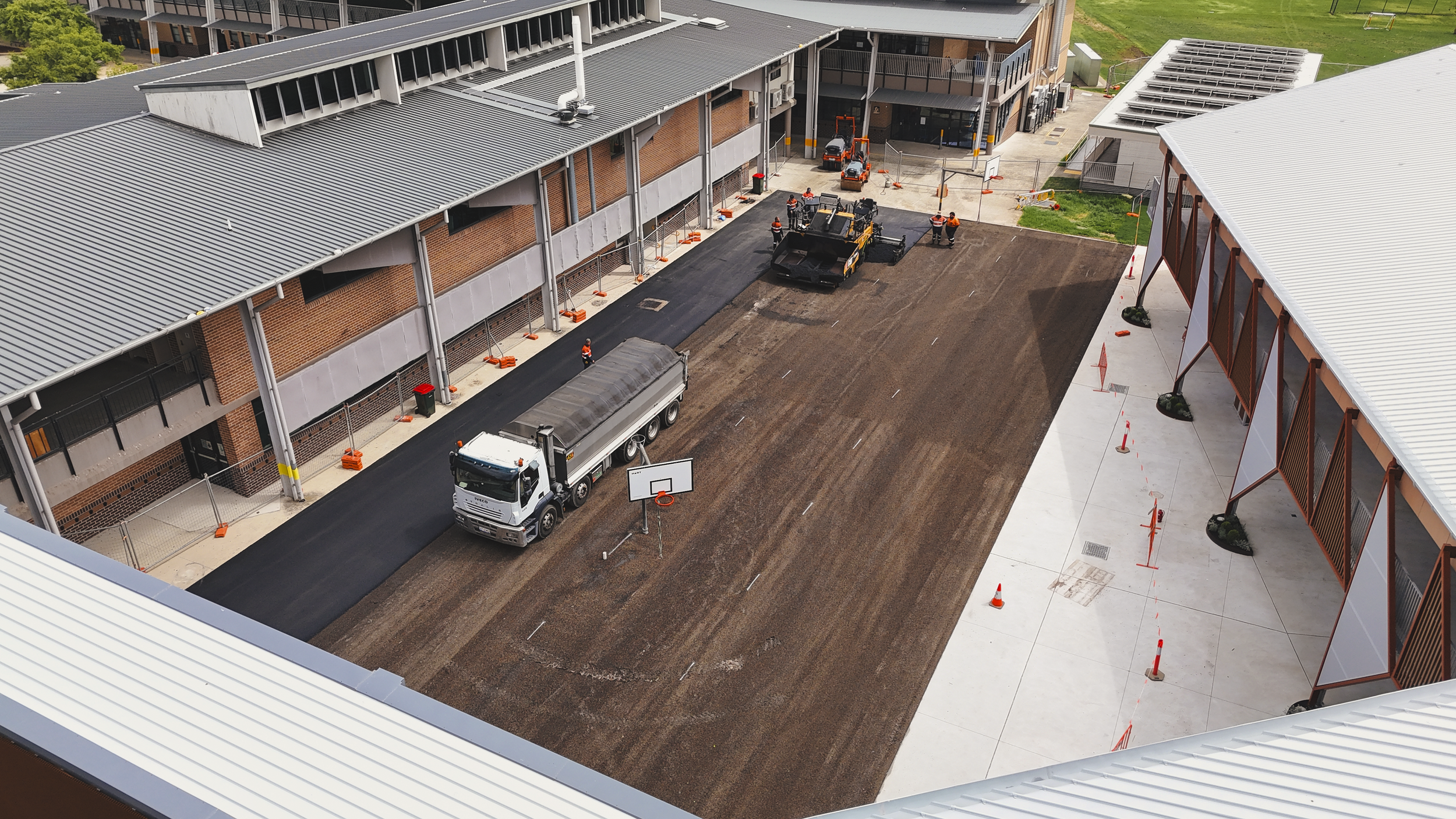
Most builders who start doing aerial progress documentation start for marketing reasons — they want a good shot for the website and a timelapse at handover.
Then about four months in, someone disputes what was under a slab, and the imagery pays for the whole engagement in an afternoon.
Here's how to work out the right cadence for a job, and what to actually capture.
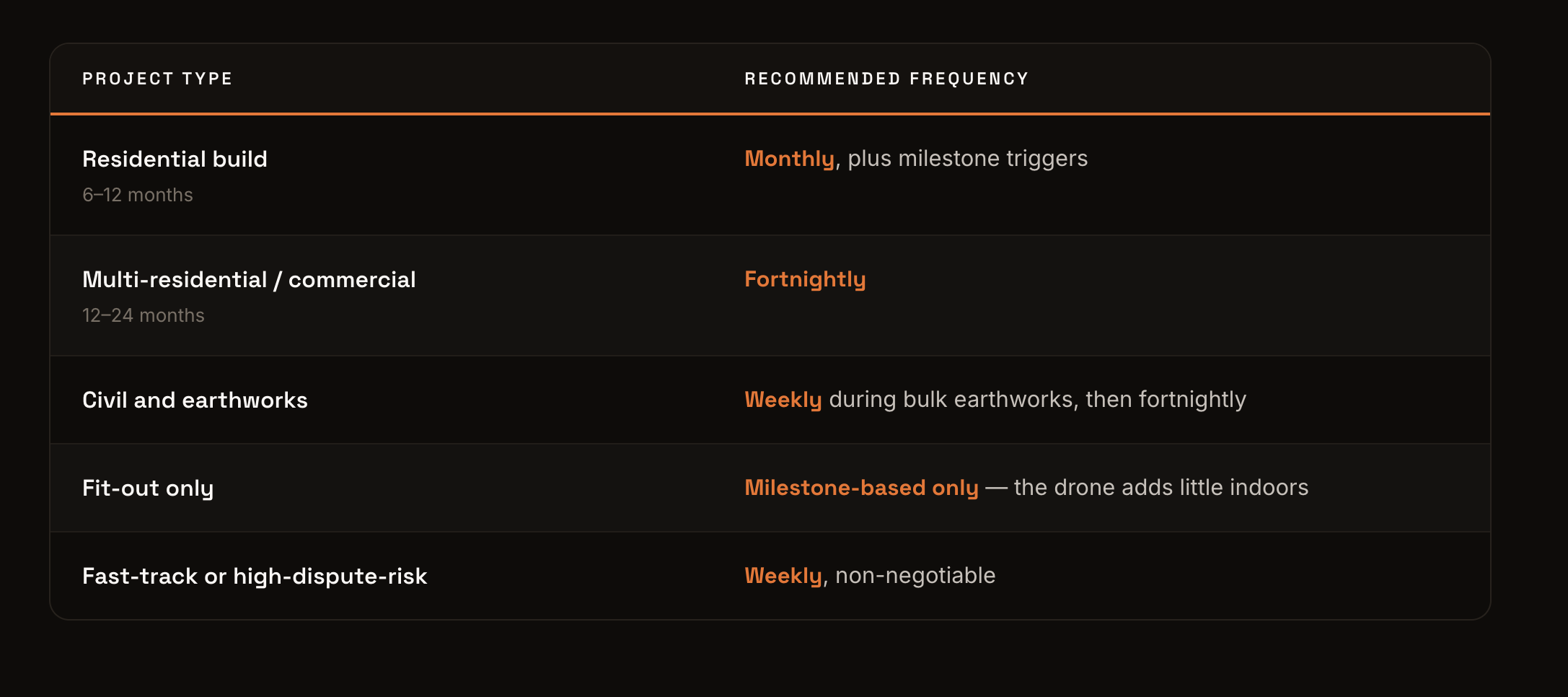
The milestones that matter more than the calendar
A fixed schedule is the baseline. But some moments are worth capturing regardless of where you are in the cycle, because they're the ones that get argued about later.
Before anything happens. Existing conditions, adjoining properties, the state of the verge and footpath, existing damage on neighbouring structures. This is dilapidation territory and it's the single most valuable capture on the whole job — see our dilapidation survey article.
Site establishment. Fencing, site sheds, crane position, access. Useful for the neighbours' complaint you'll get in month three.
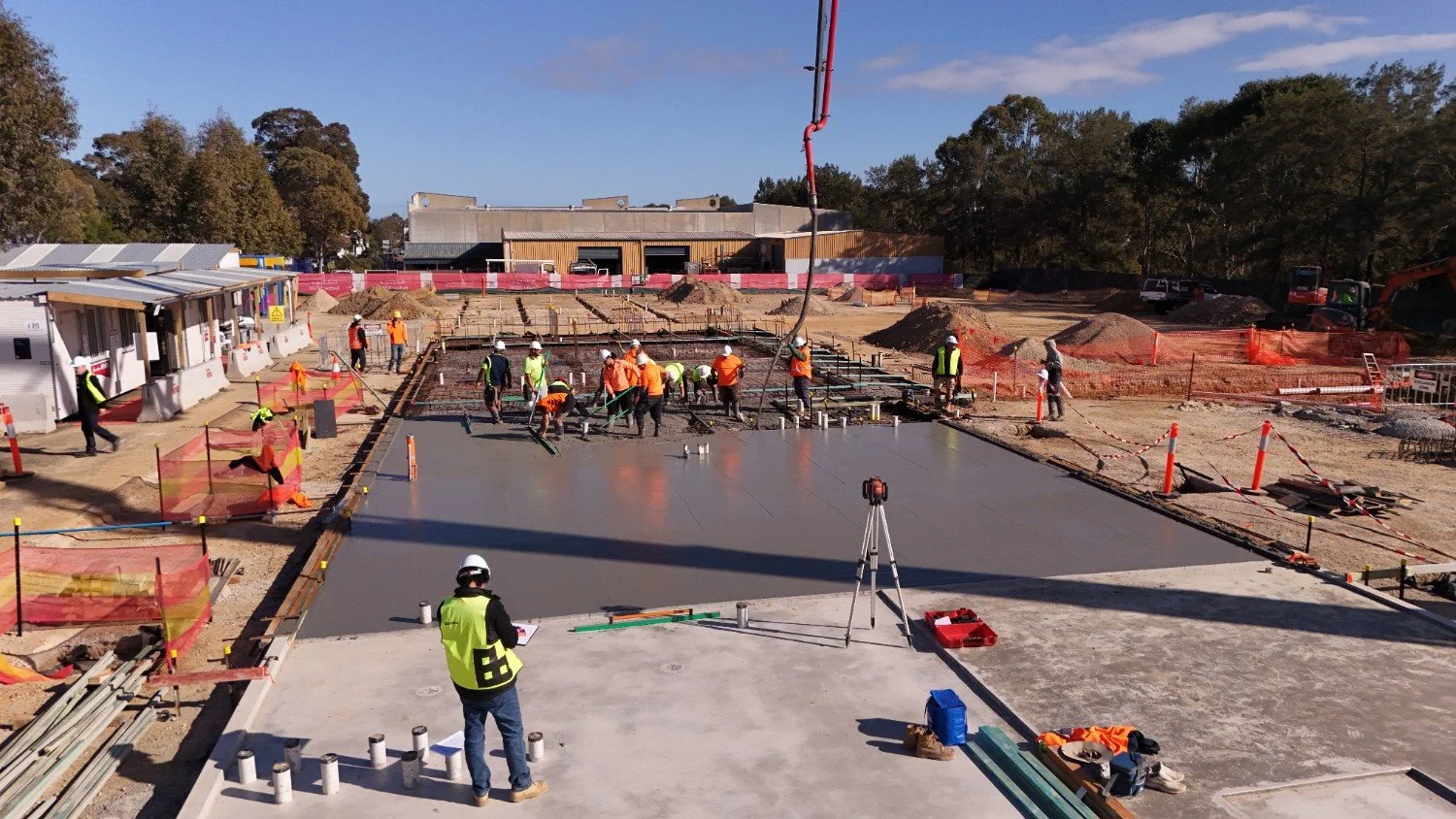
Post-excavation, pre-pour. Once concrete goes down, whatever's underneath is only ever a memory and a set of photographs. Capture the excavation, the services, the shoring.
Every slab pour. Same reasoning, one level up.
Structure topped out. The best marketing shot on most jobs, and a clean record of the built form against the approved envelope.
Facade complete. Before scaffold comes down, and again after.
Practical completion. The handover set, and the shot that ends up on your website.
Anything unexpected. Storm damage, a neighbour dispute, a variation, an incident. Fly it that week.
What each visit should actually produce
A progress visit shouldn't just be a nice photo. A proper capture set includes:
Fixed-position obliques — the same four or five angles from the same GPS positions every single visit. This is what makes the sequence comparable. Without repeatable positions, you have a photo album, not a record.
Top-down orthomosaic — a stitched, measurable map of the site as it stood that day. You can pull distances and areas off it later.
Detail imagery — whatever was significant this visit. A completed pour, a delivery, an area of concern.
Short video pass — 20–30 seconds, useful for client updates and social content.
The fixed-position obliques are the part that gets skipped and the part that matters most. Flying the same coordinates each time turns twelve site visits into one comparable sequence.
What builders actually use it for
Client updates that reduce phone calls. A developer who gets a monthly aerial set with a two-line summary rings you less. That's a real, measurable saving in your week.
Variation and delay claims. "The site was in this condition on this date" is a far stronger position than a recollection. Timestamped aerial imagery is difficult to argue with.
Subcontractor coordination. A current top-down of the site is a better conversation starter at a site meeting than a set of drawings that are three revisions behind reality.
Adjoining owner disputes. Cracking in the neighbour's driveway, allegedly caused by your excavation. If you have imagery from before you started, that conversation resolves quickly.
Marketing you didn't have to organise. By the time the job finishes you've got a year of aerial footage. A timelapse and a set of hero stills come out of material you already own.
Handover documentation. Increasingly, larger clients expect a photographic record as part of the O&M package.
Working out whether it's worth it
Rough numbers for a 12-month Sydney job at fortnightly capture: around 26 visits.
Compare that to:
One variation claim resolved in your favour
One adjoining-owner dispute closed without a lawyer
One marketing asset you'd otherwise have paid a videographer to produce at completion
You don't need all three. You generally need one.
That's the honest pitch. It's insurance with a marketing by-product, not the other way around.
Getting it set up properly
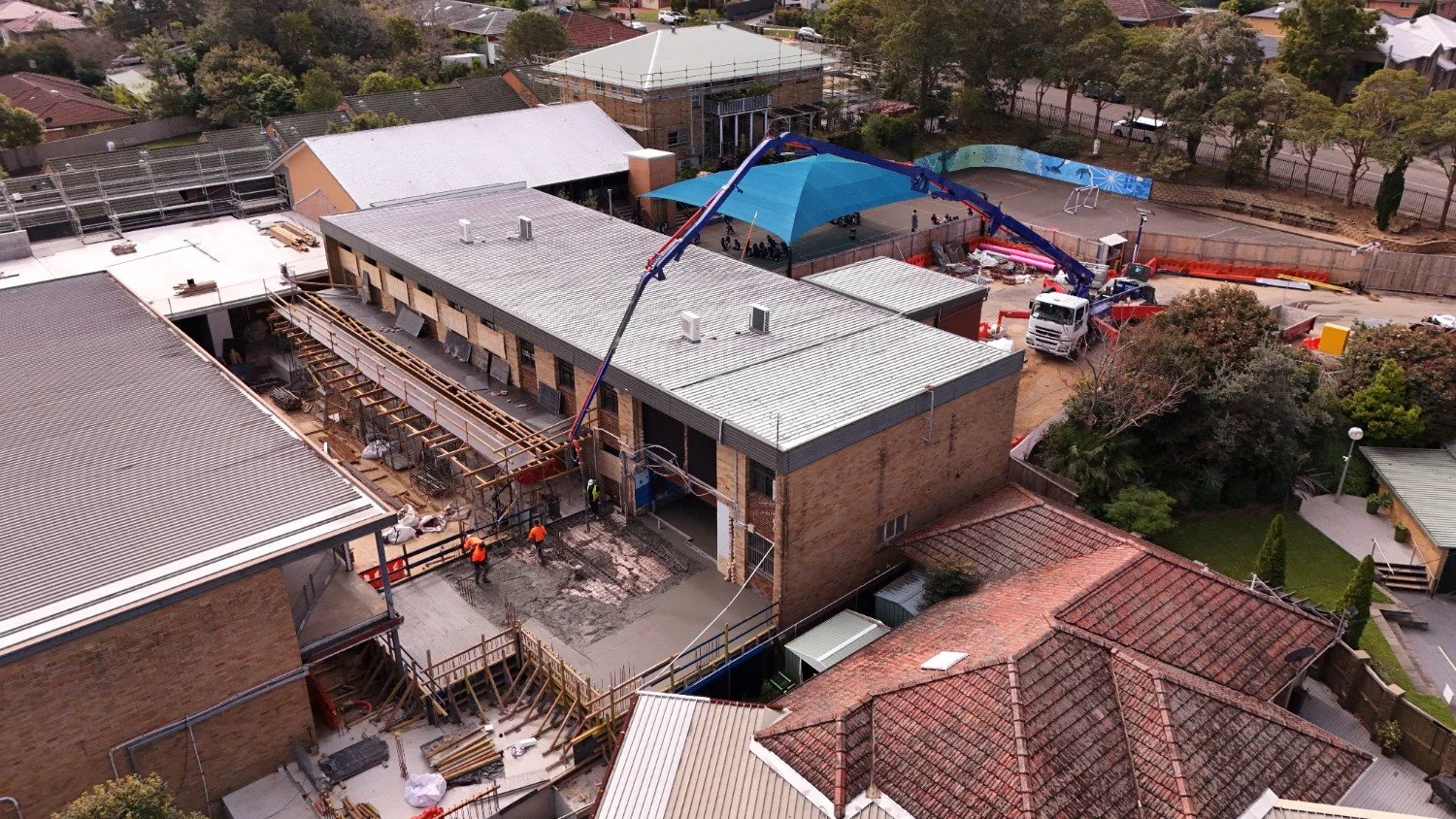
Agree the flight positions on day one. Walk the site, pick the vantage points, log them. Every subsequent flight repeats them.
Put it in the program. Progress capture that depends on someone remembering to book it doesn't happen. Standing fortnightly booking, same day of the week.
Decide who receives it. Usually the PM, the client, and one shared archive. Delivery should be a link, not a 4GB email.
Sort airspace before you start. If your site sits in controlled airspace, that gets resolved once at the beginning rather than being a surprise every fortnight.
Keep the raw files. Storage is cheap. Disputes surface years later.
What Hoverly does
We run scheduled progress documentation for builders and developers across Sydney — weekly, fortnightly or milestone-based, with fixed flight positions logged from the first visit so the whole sequence is comparable.
You get the imagery, the orthomosaic, an edited video pass, and secure delivery. At completion we'll cut the timelapse from material we've already captured.
Starting a job soon?
See how progress documentation works → Book a pre-start capture →
